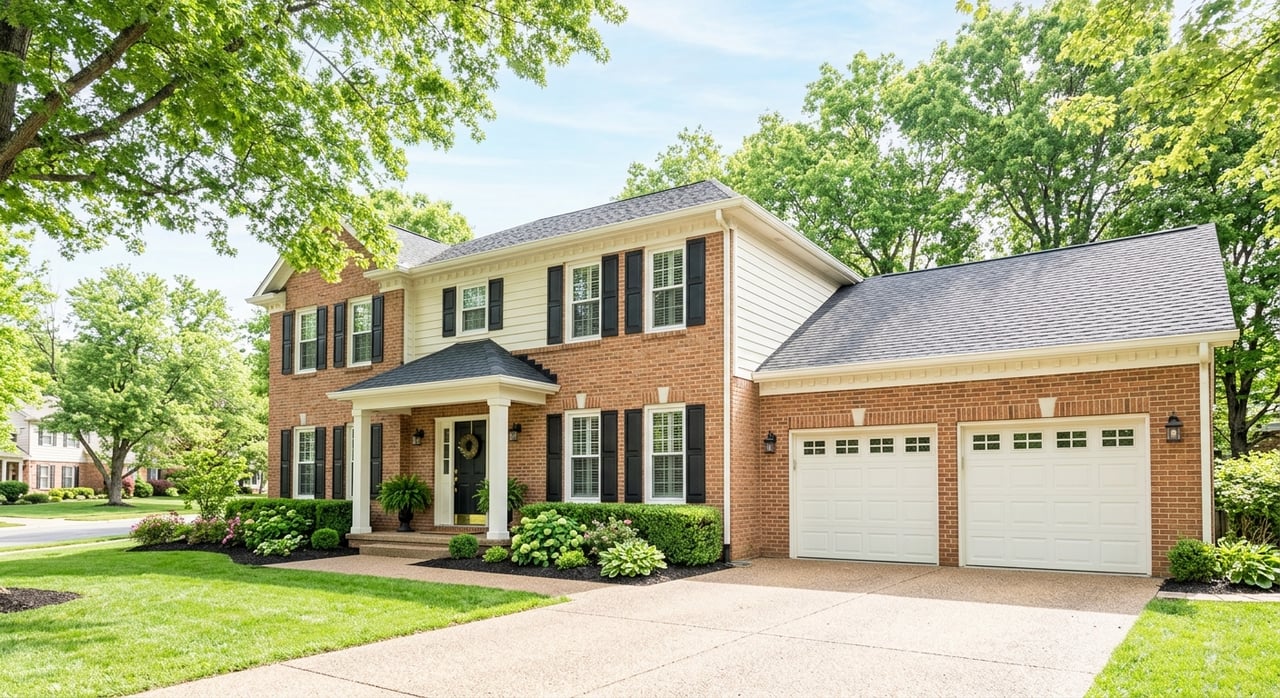
Cleveland vs Chattanooga Commute: Where to Live
April 23, 2026
April 23, 2026
If you work in Chattanooga but want more breathing room at home, you are not alone. Many buyers looking at the Cleveland-to-Chattanooga corridor are weighing the same question: how do you keep your commute manageable without giving up space, value, or everyday convenience? The good news is that there are several route-friendly areas that can help you strike that balance. Let’s dive in.
Cleveland sits about 25 miles northeast of Chattanooga and connects through key routes including I-75, US 11 and 64, and State Routes 60, 74, 40, and 2. The city also has the APD-40 bypass, which runs from Exit 20 around the south side of Cleveland to 25th Street and back to I-75 at Exit 25, according to the City of Cleveland street map.
That road network matters because this is not usually a quick in-town commute. Census QuickFacts shows mean travel time to work at 20.9 minutes in Cleveland, 23.1 minutes in Bradley County, 18.7 minutes in Chattanooga, and 21.9 minutes in Hamilton County. For most buyers, the real decision is not whether you will commute, but how predictable and practical that drive will feel each day.
This is also a well-established commuter pattern. In 2023, Bradley County sent 12,442 workers into Hamilton County, making Bradley County the second-largest labor source for Hamilton County, according to the Chattanooga Chamber commuting report.
In everyday terms, I-75 is the main spine of the corridor. If you plan to live in Cleveland and work in Chattanooga, one of the biggest quality-of-life factors is how quickly you can reach the interstate and how easily you can get back home at the end of the day.
That is why route access often matters as much as the home itself. A property that looks only slightly farther out on a map may feel much easier in real life if it connects cleanly to APD-40 or an I-75 interchange.
For many buyers, south Cleveland is the clearest first place to explore. The APD-40 and Exit 20 area offers direct ties into I-75, and the bypass system also reconnects through 25th Street and Exit 25, based on TDOT’s APD-40 study materials.
If your priority is getting onto the highway efficiently, this part of the market is often attractive. It can also appeal if you want to stay in Cleveland while keeping your drive to Chattanooga as straightforward as possible.
Central Cleveland can make sense if you want a blend of commuter convenience and day-to-day services. While it may not always offer the fastest interstate access compared with the southern bypass areas, it can give you easier access to shopping, health care, and local institutions without feeling too far removed from the main road network.
That tradeoff matters for households that want to keep many errands local. Cleveland is described in the city’s annual financial report as a regional shopping destination and health care provider, and it is also home to Lee University and Cleveland State Community College.
Northwest Cleveland is another area to watch, especially if access to SR 60 and I-75 is high on your list. TDOT reports that the SR 60 / Georgetown Road corridor north of I-75 is being widened due to increased daily traffic, nearby schools, and commercial development.
For commuters, this points to an area with strong regional relevance. It may be especially worth a look if you want highway access without living right along the interstate itself.
If your top priority is trimming commute time rather than maximizing house or lot size, it may make sense to focus closer to Chattanooga. In this corridor, the areas most tied to commuter movement include East Brainerd, Hamilton Place, Ooltewah, Collegedale, and Apison.
TDOT’s Apison Pike project is designed to improve access between I-75 and East Brainerd Road, with connections serving Ooltewah, Collegedale, Apison, Enterprise South Industrial Park, Southern Adventist University, McKee Foods, and the Collegedale Municipal Airport. TDOT also has an active interchange improvement project at I-75 and Hamilton Place, which reinforces how important this side of the market is for regional commuting.
For some buyers, that means a shorter or simpler drive. For others, it means giving up some of the space or value they may find farther north in Bradley County.
For many households, this decision comes down to what you want most from your next move. If you lean toward more space and a less urban setting, Bradley County and Cleveland often stand out. If you want to be closer to a larger job base and amenities, Chattanooga and Hamilton County may feel like the better fit.
The latest Census QuickFacts for Bradley County show median owner-occupied housing values of $230,800 in Bradley County, $241,800 in Cleveland, $259,200 in Chattanooga, and $282,100 in Hamilton County. The same source shows owner-occupied housing rates of 67.5% in Bradley County, 50.3% in Cleveland, 53.1% in Chattanooga, and 64.3% in Hamilton County.
Population size also helps explain the feel of each market. Bradley County’s 2024 estimate was 113,782, Cleveland’s was 50,232, Chattanooga’s was 191,496, and Hamilton County’s was 386,256, according to Census QuickFacts. In practical terms, buyers often experience Cleveland and Bradley County as a smaller-scale market, while Chattanooga and Hamilton County offer a larger urban footprint.
This corridor is still largely car-centered. For most people commuting between Cleveland and Chattanooga, driving remains the main option.
That said, transit does exist. TDOT lists SETHRA transit for Bradley County and non-urbanized parts of Bradley and Hamilton counties, while CARTA serves Chattanooga and Hamilton County with fixed routes, shuttles, paratransit, and Park & Ride lots. If you are trying to reduce driving, it is worth reviewing those systems closely, but most buyers should still plan around a car-based commute.
Commute planning is not just about distance. Construction timing and interchange work can also affect how reliable your drive feels from week to week.
As of spring 2026, TDOT has active or recent work on SR 60, SR 317 or Apison Pike, and the I-75/Hamilton Place interchange. If your schedule is tight, this is a smart reminder to look beyond mileage and think about daily route patterns, backup options, and how often you will need to pass through active work zones.
If you are narrowing down commute-friendly areas between Cleveland and Chattanooga, start with a few simple questions:
The best answer is usually not the area that looks closest on a map. It is the area that fits your routine, budget, and long-term goals.
If you want help comparing route-friendly areas, weighing space against commute time, or finding the right fit on either side of the corridor, connect with Melody Smith. You will get practical local guidance grounded in real market knowledge, so you can move with confidence.
Stay up to date on the latest real estate trends.

Work with a team of experienced real estate professionals dedicated to delivering results. We combine deep market knowledge, innovative strategies, and a client-first approach to ensure your buying or selling experience is smooth, transparent, and successful.