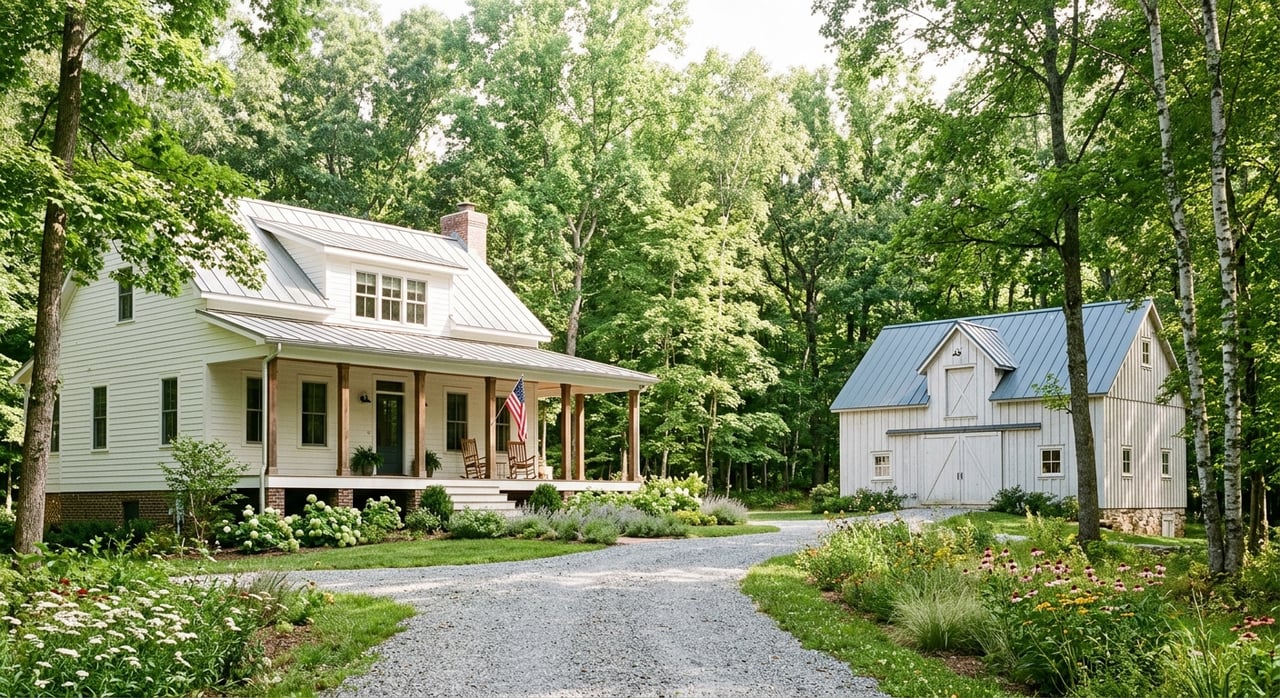
Buying Land in Decatur TN: Key Checks for Mini-Farm Buyers
May 14, 2026
May 14, 2026
If you are thinking about buying land or a mini-farm in Decatur, Tennessee, one detail can make or break the deal long before closing: not every piece of acreage works the way you hope it will. A parcel may look perfect on paper, but questions about zoning, septic, utilities, access, and floodplain can change the picture fast. If you want to buy with confidence, it helps to know what to check first and how Decatur and Meigs County handle land differently. Let’s dive in.
Decatur sits in Meigs County, an area known for Watts Bar Lake, Chickamauga Lake, and the Hiwassee River. Meigs County describes itself as the Shoreline County and reports a population of roughly 13,000 residents, which gives the local land market a more rural and small-market feel than a typical subdivision search.
That matters because your options may range from in-town lots to open acreage to water-adjacent tracts. In a market like this, the key questions often go beyond price per acre. You also need to think about road frontage, practical access, utility service, floodplain limits, and whether the land can support the way you want to use it.
One of the most important first steps is confirming whether the parcel is inside the Town of Decatur or in unincorporated Meigs County. That single detail affects which planning office you deal with and what permit path may apply.
In Decatur, residential construction requires a Zoning Compliance Permit, and the town posts a $125 application fee. Commercial or industrial projects must be approved by the municipal planning commission.
Outside town limits, Meigs County Planning and Zoning handles county compliance permits. The county is responsible for interpreting and enforcing zoning, subdivision regulations, mobile home regulations, and floodplain regulations in unincorporated areas.
When buyers picture a mini-farm, they often focus on acreage, views, and layout. But zoning is what tells you whether the property can legally support your intended use.
In unincorporated Meigs County, the FAR district is one of the most important rural and agricultural zoning categories to review. Under the current county ordinance, the FAR district allows a broad mix of uses that may interest land buyers, including:
At the same time, the ordinance prohibits some uses buyers may not expect to see limited, including:
This is why zoning review matters so much. If you want a homesite with a barn, shop, fencing, or animal use, the parcel may work well. If your plans involve a use outside what the district allows, you need clarity before you move forward.
A common mistake is assuming that if a parcel has enough acres, it must be buildable. In reality, lot-size rules vary by zoning district, by use, and by whether public water is available.
In the county’s FAR district, the ordinance lists a minimum lot size of 20,000 square feet with public water and 25,000 square feet without public water for single-family detached residential structures. That means a parcel can be large in total size but still have issues if access, setbacks, utilities, or site conditions limit where improvements can actually go.
For a mini-farm, this is where planning becomes practical. You may need enough usable area not only for a home, but also for outbuildings, fencing, parking, equipment access, and future expansion.
If you are buying inside Decatur or near existing service lines, utility access may be a major advantage. The Town of Decatur lists electric and broadband through Volunteer Energy Cooperative, natural gas through Middle Tennessee Natural Gas, and water and wastewater through the town.
The town’s posted utility schedule includes a $25 activation fee, a $150 refundable deposit, and $1,200 residential water and sewer tap fees. The town also posts different water and sewer rates for properties inside and outside the corporate limits.
Volunteer Energy Cooperative has a Decatur office on State Highway 58 North, and Middle Tennessee Natural Gas lists Decatur among the Meigs County communities it serves. For buyers, this makes it easier to ask specific service questions before closing instead of relying on assumptions.
For many land and mini-farm purchases in Meigs County, septic is one of the biggest feasibility checks. If public sewer is not available, you need to know early whether the property can support the septic system your plans require.
Tennessee requires permits for the installation, repair, alteration, or extension of a septic system. Meigs County directs septic requests to the Tennessee Department of Environment and Conservation’s Chattanooga Environmental Field Office and the state’s septic portal.
TDEC also maintains information on approved soil consultants and licensed installers and pumpers. In practical terms, that means you should involve the right septic professionals before you treat a parcel as a guaranteed homesite.
Even beautiful land can be frustrating if the access is poor or the layout limits what you can build. That is why road frontage, easements, rights-of-way, setbacks, and utility routing should be part of your early review.
Meigs County’s site-plan rules show just how important those factors are. For commercial, multifamily, industrial, public, and semi-public development, site plans must be stamped by a licensed engineer, surveyor, or architect. For detached single-family residences, including mobile homes, a sketch plan may be used instead.
Required plan content includes property lines, setbacks, easements, rights-of-way, access points, utility providers, and floodplain limits. Even if your purchase is simpler than a larger development, these same practical details still affect value and usability.
Because Meigs County is shaped by lakes and river frontage, water-adjacent land can be especially appealing. It can also require extra homework.
If a tract is near Watts Bar Lake, Chickamauga Lake, the Hiwassee River, or other low-lying areas, floodplain limits may affect where you can build or place improvements. In unincorporated areas, Meigs County Planning and Zoning is responsible for floodplain regulations, so it makes sense to confirm those boundaries early in your due diligence.
If you are buying agricultural acreage, property taxes are another important part of the numbers. Meigs County explains that Tennessee’s Greenbelt law taxes qualifying farm and forest land based on present use rather than market value.
The county also notes a 1,500-acre per-owner cap per county, a March 15 application deadline, notarized applications, and a $12 recording fee with the Register of Deeds after acceptance. If Greenbelt may apply to your purchase, it is worth understanding the process and timing as part of your long-term ownership plan.
Land can look simple compared with an existing home, but title review is just as important. Meigs County’s Register of Deeds records deeds, liens, plats, subdivision restrictions, and other real-property documents, which can help you gather the paper trail on a parcel.
At the same time, the Register of Deeds states that it cannot provide title searches or legal advice. That means title review should still be handled through an attorney or title company so you understand any recorded issues before closing.
Not all acreage carries the same value in practice. A parcel that has good access, workable topography, and realistic utility or septic potential may attract more attention than land that is scenic but difficult to improve.
That pattern lines up with the University of Tennessee’s Meigs County land-use report, which shows 2,259 acres of agriculture land and 1,614 acres of farm land converted to residential use from 2015 through 2024. For buyers, that is a reminder that functional, buildable land often stands out.
If you want to reduce surprises, a clear order of operations helps. Before you fall in love with the view, make sure the property works on paper and on the ground.
Here is a practical checklist to follow:
This kind of step-by-step approach can save you time, money, and frustration. It also helps you compare parcels based on real usability, not just acreage totals.
A good mini-farm purchase is usually about more than finding open space. You are really buying a combination of legal use, physical layout, utility options, septic feasibility, and long-term practicality.
That is where experienced guidance matters. When you have local market insight and construction-minded thinking in the conversation, it becomes easier to spot the difference between land that merely looks promising and land that truly fits your plans.
If you are considering land or a mini-farm in Decatur, the right guidance can help you ask better questions before you commit. Reach out to Melody Smith for practical, local insight as you evaluate your options.
Stay up to date on the latest real estate trends.

Work with a team of experienced real estate professionals dedicated to delivering results. We combine deep market knowledge, innovative strategies, and a client-first approach to ensure your buying or selling experience is smooth, transparent, and successful.